
Find conference presentations sponsored or co-sponsored by Excellence, journal articles, and a selection of books. Watch this page for new research results; when one of our grantees delivers a project report, it is published here.
In the Stacks
Conference & Symposium Presentations
Recommended Reading: Journal Articles | Books
Latest Resources
• A Quick Guide to Research & Evidence on Peer Support
(Miller/VanTosh, 2019)
• Akathisia, What to watch for, what to try next
• Understanding Post-SSRI Sexual Dysfunction (PSSD)
• Early Psychosis Intervention Program Directory Map | PDF
• RxISK Guide to Stopping Antidepressants
Grantee Reports & Publications
• Alternative National Treatment Guidelines Children, Michael J. Murphy, EdD
• Antipsychotic Medication for Schizophrenia Ineffective in the Long Term, Martin Harrow, MD
• Recovery from Schizophrenia, Martin Harrow, MD
• Bringing Open Dialogue to the U.S., Doug Ziedonis, MD
The kickoff meeting of HOPEnDialogue, a new Open Dialogue international research collaborative, in Rome, Italy, July 2, 2019
In 2019, the Foundation for Excellence in Mental Health Care began funding HOPEnDialogue to promote and assess the fidelity of Open Dialogue practice and evaluate its effectiveness internationally. HOPEnDialogue, coordinated by the Italian National Research Council, is inspired by- and linked to the ODDESSI-study, the first randomized trial of Open Dialogue, ongoing in the UK. | Kickoff Program
.
|
Raffaella Pocobello, PhD
|
|
Gina Nikkel, PhD and Chris Gordon, PhD
|
Drs. Guiseppe Salamina and Raffaella Pocobello
|
|
Drs. Steve Pilling and Russell Razzaque
|
Marcello Macario, MD
|
|
Andrea Zwicknagl
|
Jaakko Seikkula, PhD
|
|
Mary Olson, PhD |
Nick Putman |
An international gathering at Yale University which reviewed new data generated over the last decade related to the treatment, course, and outcome of serious mental illnesses and the implications of these data for changing clinical practice in psychiatry. Co-sponsors included The Foundation for Excellence in Mental Health Care, Yale Program for Recovery and Community Health, and the Connecticut Department of Mental Health & Addiction Services. | Symposium agenda
 The role of psychosocial interventions in promoting recovery | Larry Davidson, PhD | Slides (PDF), Video The role of psychosocial interventions in promoting recovery | Larry Davidson, PhD | Slides (PDF), Video |
 What the antidepressant story tells us about recovery What the antidepressant story tells us about recoveryDavid Healy, MD, FRC Psyc | Slides (PDF), Video |
|
 |
||
 Open Dialogue: The Advocates Experience – The Collaborative Pathway and Open Dialogue in Community-Based Flexible Supports | Christopher Gordon, MD | Slides (PDF), Video Open Dialogue: The Advocates Experience – The Collaborative Pathway and Open Dialogue in Community-Based Flexible Supports | Christopher Gordon, MD | Slides (PDF), Video |
 Role of antipsychotic medications in the long-term treatment of psychosis, part II | Lex Wunderink MD, PhD | Slides (PDF), Video Role of antipsychotic medications in the long-term treatment of psychosis, part II | Lex Wunderink MD, PhD | Slides (PDF), Video |
|
|
||
 Role of antipsychotic medications in the long-term treatment of psychosis, part I Role of antipsychotic medications in the long-term treatment of psychosis, part IMartin Harrow, PhD | Slides (PDF), Video |
 Lessons we have learned from longitudinal research about what promotes recovery from psychosis | Courtenay Harding, PhD | Slides (PDF) Lessons we have learned from longitudinal research about what promotes recovery from psychosis | Courtenay Harding, PhD | Slides (PDF) |
Co-sponsorship of the Children’s Mental Health Summit, September 2012.
A national gathering in Syracuse, New York, with over 75 presentation documents. Co-sponsors included The Foundation for Excellence in Mental Health Care, It’s About Childhood and Family, Inc., The Gifford Foundation, Contact Community Services, Inc. and The David B. Falk College of Sport & Human Dynamics at Syracuse University.
Breggin, Peter. How and Why to Save Our Children from Psychiatric Drugs
Copeland, Mary Ellen. Building Self-Agency in Children
Kaplan, Bonnie. Treatment of Psychiatric Disorders with Broad-Spectrum Nutrients: The Importance of Biomimicry
Leo, Jonathan & Lacasse, Jeffrey. Thinking Critically about the Mental Health Literature: Implications for Helping Professionals Working with Children
Pentz, Judith. Micronutrients in Clinical Care with Children/Teens
Whitaker, Robert. Assessing The Evidence: What Science Has to Say about the Prescribing of Atypical Antipsychotics to Children
3-Year Follow-Up of the NIMH MTA Study
Problems in Psychiatric Genetic Research: A Reply to Faraone and Biederman
Treating ADHD: Are Attention Disorders Overdiagnosed?
Needed: Critical Thinking about Psychiatric Medications
Confirming the Hazards of Stimulant Drug Treatment
Broken Brains or Flawed Studies? A Critical Review of ADHD Neuroimaging Research
Stimulant Treatment as a Risk Factor for Nicotine Use and Substance Abuse
An Update on ADHD Neuroimaging Research
Not in Their Genes: A Critical View of the Genetics of Attention-Deficit Hyperactivity Disorder
Psychostimulants in the Treatment of Children Diagnosed with ADHD: Risks and Mechanism of Action
Long-term Outcomes Associated with Stimulant Medication in the Treatment of ADHD in Children
Aggression, Mania, and Hypomania Induction Associated with Atomoxetine
Sudden Death and Use of Stimulant Medications in Youths
Twin Studies in Psychiatry and Psychology: Science or Pseudoscience?
What Psychologists and Therapists Need to Know about ADHD and Stimulants
The Neuropathological Effects of Antipsychotic Drugs
An Introduction to Conscious Discipline
Reclaiming Playful Learning in Kindergarten
Reclaiming Kindergarten: Part I. Questions about Theory and Practice
Reclaiming Kindergarten: Part II: Questions About Policy
Rest is Not Idleness: Reflection is Critical for Development and Well-Being
Treatment of Psychiatric Disorders with Broad-Spectrum Nutrients: The Importance of biomimicry
Non-Profit Advocacy Groups – Part IV Tracking the American Epidemic of Mental Illness
Psychiatric Drugging of Infants and Toddlers in the US – Part I
Psychiatric Drugging of Infants and Toddlers in the US – Part II
Tracking the America Epidemic of Mental Illness – Part I
Tracking the American Epidemic of Mental Illness – Part II
Tracking the American Epidemic of Mental Illness – Part III
Biological Psychiatry: A Practice in Search of a Science
Pediatric Bipolar Disorder: An Object of Study in the Creation of an Illness
How Do Psychiatric Drugs Work?
The DSM Debate: Potential Harms Related to Psychiatric Diagnosis
Evaluating Montessori Education
Educating the Heart as Well as the Mind: Social and Emotional Learning for School and Life Success
Crisis in the Kindergarten: Why Children Need to Play in School
Treatment-induced Suicide: Suicidality as a Potential Effect of Psychiatric Drugs
Serotonin and Depression: A Disconnect between the Advertisements and the Scientific Literature
Do Antidepressants Cure or Create Abnormal Brain States?
Challenging Received Wisdom: Antidepressants and the Placebo Effect
Efficacy of Antidepressants in adults
The Prospective Course of Rapid-Cycling Bipolar Disorder: Findings From the STEP-BD
The SSRI Trials in Children: Disturbing Implications for Academic Medicine
Selective Publication of Antidepressant Trials and Its Influence on Apparent Efficacy
Effectiveness of Antidepressants: An Evidence Myth Constructed from A Thousand Randomized Trials?
Models for Developing Trauma-Informed Behavioral Health Systems and Trauma-Specific Services
Creating Cultures of Trauma-Informed Care (CCTIC): A Self-Assessment and Planning Protocol
NCCTS Leadership: Evidence-Based Practices
The second international summit (Chapel Hill, NC) was organized by Excellence with the goals of gathering and disseminating accurate information and helping to shift awareness. Participants presented the following discussion papers:
Early Assessment and Support Alliance (EASA), Ryan Melton, LPC, ACS, PhD (ABD)
Open Dialogue, Mary E. Olson, PhD
Outreach and Support Intervention Services (OASIS), Diana O. Perkins, MD, MPH
Healing the Body and Mind, Mark Foster, DO
Also discussed: Identifying Priorities for Patient-Centered Outcomes Research for Serious Mental Illness. One of the investigators is past Foundation board member John Gilmore, M.D., UNC – Chapel Hill.
The first Excellence symposium (Portland, OR). An international gathering of mental health treatment professionals in response to Robert Whitaker’s shocking assessment of research on psychotropic drugs in his book, Anatomy of an Epidemic. We created discussion papers along four tracks: medication optimization, schizophrenia treatment, depression treatment and public policy:
Medication Optimization in the Service of Recovery
Guidelines for the Treatment of Schizophrenia
Effective strategies for positive long term outcomes in depression
Protocol for Antidepressant Use
The Evidence Base for Antidepressants.
Medication Optimization: Public Policy & Administration
Moving Forward: Public Policy Recommendations

On December 17, 2006, The New York Times began a series of front-page stories about documents obtained from Alaska lawyer Jim Gottstein, showing Eli Lilly had concealed that its top-selling drug caused diabetes and other life-shortening metabolic problems. The “Zyprexa Papers,” as they came to be known, also showed Eli Lilly was illegally promoting the use of Zyprexa on children and the elderly, with particularly lethal effects. Although Mr. Gottstein believes he obtained the Zyprexa Papers legally, the United States District Court for the Eastern District of New York in Brooklyn decided he had conspired to steal the documents, and Eli Lilly threatened Mr. Gottstein with criminal contempt charges. In The Zyprexa Papers, Mr. Gottstein gives a riveting first-hand account of what really happened, including new details about how a small group of psychiatric survivors spread the Zyprexa Papers on the Internet untraceably. All of this within a gripping, plain-language explanation of complex legal maneuvering and his battles on behalf of Bill Bigley, the psychiatric patient whose ordeal made possible the exposure of the Zyprexa Papers.
More Information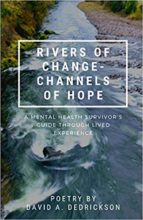
You are not alone and there is hope *If you are struggling with a mental health challenge or substance use* If you are wondering if there is anybody else like me, am I ok? This book of healing poetry creates a light in the darkness, a comforting voice in the storm. David’s raw, real and sometimes vulnerable words as he shares his journey can help you navigate the currents of substance use and mental illness with the healing power of words.
More Information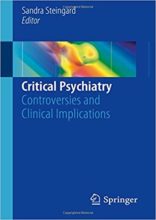
This book is a guide for psychiatrists struggling to incorporate transformational strategies into their clinical work. The book begins with an overview of the concept of critical psychiatry before focusing its analytic lens on the DSM diagnostic system, the influence of the pharmaceutical industry, the crucial distinction between drug-centered and disease-centered approaches to pharmacotherapy, the concept of “de-prescribing,” coercion in psychiatric practice, and a range of other issues that constitute the targets of contemporary critiques of psychiatric theory and practice. Written by experts in each topic, this is the first book to explicate what has come to be called critical psychiatry from an unbiased and clinically relevant perspective.
Critical Psychiatry is an excellent, practical resource for clinicians seeking a solid foundation in the contemporary controversies within the field. General and forensic psychiatrists; family physicians, internists, and pediatricians who treat psychiatric patients; and mental health clinicians outside of medicine will all benefit from its conceptual insights and concrete advice.
More Information
We need to face facts: psychiatric drugs don’t cure; they partially mask symptoms of mental illnesses—often at the cost of serious side-effects. Written for those who struggle with mental health issues and their loved ones, CHOICES IN RECOVERY demystifies the best non-drug therapies for every mental health diagnosis, from depression to schizophrenia, discussing their benefits, clinical evidence, and drawbacks.
More Information