
Health Minister Greg Hunt has asked his department to review the results of an academic study linking the increase in youth suicide with a rise in antidepressants being prescribed to Australian children.
The Curtin University study published in the peer-reviewed Frontiers of Psychiatry journal linked rising antidepressant use in children, adolescents and young adults (up 66 per cent) and youth suicide (up 49 per cent) in the decade to 2018, when 458 young Australians took their own lives.
The Curtin University study linked antidepressant use in children, adolescents and young adults to youth suicide.
Hayley, who asked for her last name not to be published, suffered nausea, headaches and suicidal thoughts when she tried to stop taking the antidepressant Arapax, which she had been prescribed from the age of 15 for obsessive-compulsive disorder.
“My mind went to a pretty dark place during the withdrawal process,” she told the Sydney Morning Herald and The Age.
“I had thoughts of self harm. I constantly felt dizzy all the time, sweating.”
Antidepressants are not approved for use in patients under the age of 18 in Australia and must carry a warning label about the suicide risk, but more than 100,000 children are currently being prescribed the drugs “off label”, as allowed by the Therapeutic Goods Administration.
While she was taking the drug, Hayley said, withdrawal symptoms would kick in within hours of a missed dose, such as when she had to wait until lunchtime to fill a prescription after running out.
“I wanted to get off it when I was 18, but it took me until I was 23,” she said.
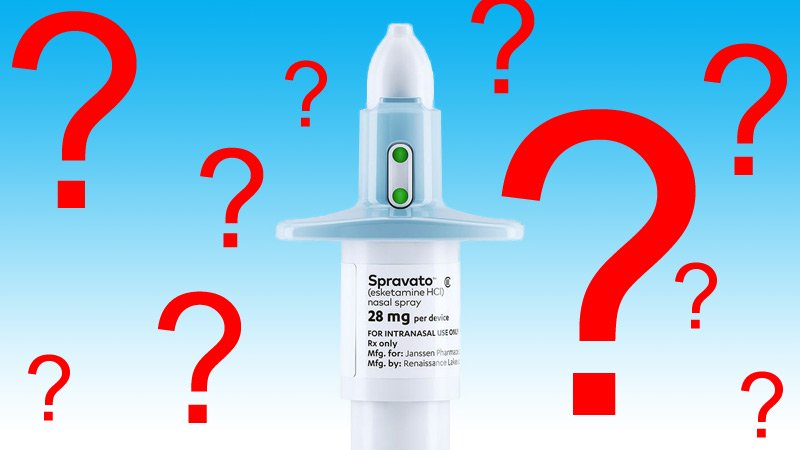
Read MoreIn a new article published in The British Journal of Psychiatry, researchers Joanna Moncrieff and Mark Horowitz reviewed the evidence for the use of esketamine for depression. They found a lack of evidence for efficacy and a minimization of the harms of the drug.
“Esketamine has been licensed for ‘treatment-resistant depression’ in the USA, UK, and Europe. Licensing trials did not establish efficacy: two trials were negative, one showed a statistically significant but clinically uncertain effect, and a flawed discontinuation trial was included, against Food and Drug Administration precedent. Safety signals – deaths, including suicides, and bladder damage – were minimized,” Moncrieff and Horowitz write.
Part 1 of 2
Few things are more frustrating and heartbreaking for a parent than having a child who struggles with anxiety, behavior, mood issues, or learning, doing everything they’re told to do to help that child and then watching them continue to struggle or get worse over time. Most parents want what is best for their children and will do whatever they can to help them be happy, healthy, and successful.
Parents of children with challenges can quickly find themselves and their child on a twisted path of evaluations, treatment recommendations, and medications that seems to lead nowhere close to the destination they and their child desire – for the child to feel and function well. They are typically not given thorough information about potential root causes of their child’s challenges, all available options to address them, or what they should do before looking at medications for their child. So, parents do what they are told will be helpful – they fill the prescriptions and expect that their child will improve.
But rarely is that the end of the story. For many, it is the beginning of a rollercoaster ride that neither parents nor child agreed to take. Psychiatric medications often do not lead to sustained improvement for children and can cause many adverse side effects that bring with them a host of new problems. Even when they do support symptom reduction, these drugs do not resolve the root causes of a child’s challenges and can lead to short and long-term health concerns. Yet they are widely used for symptoms and conditions that research has shown benefit from other approaches without the short and long-term safety concerns associated with these drugs.
What happens when a parent has gone down the medication path with their child, but now desires to take another approach? Or when a child decides they no longer want to use psychiatric drugs to address the behaviors or feelings for which they were prescribed? How can parents help their child safely withdraw from these medications? What treatments and supports may be needed to get through this process, and to address the problems without medications?
Read MoreWomen who take benzodiazepines, such as Valium or Xanax, before becoming pregnant may be at increased risk for ectopic pregnancy, a new study found.
An ectopic, or tubal, pregnancy is one in which a fertilized egg grows outside the uterus, often in a fallopian tube, and it is a life-threatening event. The egg must be removed with medication or surgery. Benzodiazepines, sold by prescription under several brand names, are widely prescribed for anxiety, sleep problems and seizures.
The study, in Human Reproduction, used an insurance database of 1,691,366 pregnancies to track prescriptions for benzodiazepines in the 90 days before conception. Almost 18,000 of the of the women had used the drugs, and the scientists calculated that these women were 47 percent more likely to have a tubal pregnancy than those who did not.
Read MoreStockholm, Sweden: Scientists have found that some people being treated with selective serotonin reuptake inhibitors (SSRIs) have a greater tendency to commit violent crime. In addition, this effect seems to continue for up to 12 weeks after stopping SSRI treatment. This work is published in the peer-reviewed journal European Neuropsychopharmacology*, alongside a linked comment. The authors of both the paper and the comment note that the work indicates an association (rather than cause and effect) and urge caution in how the findings are interpreted.
First author Tyra Lagerberg at the Department of Medical Epidemiology and Biostatistics, Karolinska Institutet, Stockholm, said:
“This work shows that SSRI (selective serotonin reuptake inhibitor) treatment appears to be associated with an increased risk for violent criminality in adults as well as adolescents, though the risk appears restricted to a small group of individuals. We don’t claim that SSRIs cause the increased risk we see in our data. It is possible that the disorders that SSRIs are prescribed to treat, such as depression, are driving the association. In that case our findings may mean that SSRIs are unable to fully remove this tendency towards violent crime, which is also a potentially important insight. Previous work has found an association between SSRI use and violence in young individuals, but not in adults. Ours is a much bigger study which allows us to confirm that there is an association in adults as well”.
Read More
Study 329 was a clinical study that began in 1994 giving a new antidepressant to teenagers. It led to a fraud charge, a $3 billion fine, and a Black Box Warning. Despite now knowing that all trials of antidepressants done in children are negative, sales of these drugs to children and adolescents continue to increase dramatically.

A case report in Schizophrenia Bulletin suggests that patients who are taking clozapine may be at risk of clozapine toxicity if they become infected with COVID-19. Clozapine is considered the best option for patients with treatment-resistant schizophrenia, but patients taking the medication are at heightened risk of a rare but serious condition known as neutropenia, which can increase risk of severe infections.
Read More
One of the things I like most about being a scientific researcher is the surprise that comes with unexpected findings. Our study on industry payments to influential medical leaders published today in The BMJ certainly brought a few surprises for me, and some unexpected good news.
Our research team used the United States government’s amazing Open Payments database, which publishes details of almost all payments to doctors from drug and device companies. These payments, also called transfers of value, can range from a $10 meal to a $10 000 consultancy to a $10 million research grant.
We investigated industry payments to recent leaders of 10 influential professional medical associations, such as the American College of Cardiology and the American Psychiatric Association. We focused on these groups because they hold enormous power in the US and globally, often funding research, running medical education, and producing clinical guidelines. Importantly they can also play a role in setting definitions of disease and thresholds for diagnosis, which determine whether you are defined as healthy or sick.
Read MoreAround one in ten adults take antidepressants for depression in England, and their long-term use is increasing. Some need them to prevent relapse, but 30–50% could possibly stop them without relapsing and avoid adverse effects and complications of long-term use. However, stopping is not always easy due to withdrawal symptoms and a fear of relapse of depression. When general practitioners review patients on long-term antidepressants and recommend to those who are suitable to stop the medication, only 6–8% are able to stop. The Reviewing long-term antidepressant use by careful monitoring in everyday practice (REDUCE) research programme aims to identify safe and cost-effective ways of helping patients taking long-term antidepressants taper off treatment when appropriate.
Design: REDUCE is a two-arm, 1:1 parallel group randomised controlled trial, with randomisation clustered by participating family practices. Setting: England and north Wales. Population: patients taking antidepressants for longer than 1 year for a first episode of depression or longer than 2 years for repeated episodes of depression who are no longer depressed and want to try to taper off their antidepressant use. Intervention: provision of ‘ADvisor’ internet programmes to general practitioners or nurse practitioners and to patients designed to support antidepressant withdrawal, plus three patient telephone calls from a psychological wellbeing practitioner. The control arm receives usual care. Blinding of patients, practitioners and researchers is not possible in an open pragmatic trial, but statistical and health economic data analysts will remain blind to allocation. Outcome measures: the primary outcome is self-reported nine-item Patient Health Questionnaire at 6 months for depressive symptoms. Secondary outcomes: depressive symptoms at other follow-up time points, anxiety, discontinuation of antidepressants, social functioning, wellbeing, enablement, quality of life, satisfaction, and use of health services for costs. Sample size: 402 patients (201 intervention and 201 controls) from 134 general practices recruited over 15–18 months, and followed-up at 3, 6, 9 and 12 months. A qualitative process evaluation will be conducted through interviews with 15–20 patients and 15–20 practitioners in each arm to explore why the interventions were effective or not, depending on the results.
Helping patients reduce and stop antidepressants is often challenging for practitioners and time-consuming for very busy primary care practices. If REDUCE provides evidence showing that access to internet and telephone support enables more patients to stop treatment without increasing depression we will try to implement the intervention throughout the National Health Service, publishing practical guidance for professionals and advice for patients to follow, publicised through patient support groups.

Benzodiazepine prescriptions have skyrocketed since the pandemic began, write the authors. But overuse of these powerful medications is risky, and should be considered before they are prescribed. (Richard Baker/ Getty Images)
Whitney, whose name we changed to protect her privacy, sometimes has panic attacks. Her hands shake and her chest tightens. By the end of one, she’s drenched in sweat. To alleviate her worry about having another attack, she carries a prescription bottle of clonazepam, a benzodiazepine, with her everywhere she goes.
The medication works fast, and can end a panic attack within minutes. She uses it so rarely that the name has rubbed off the bottle and she often wonders if the medication is expired. But, simply having it on her acts as a sort of psychological safety blanket. She knows if she is going to have a panic attack in class, the clonazepam is there and will work. Because she hardly ever uses it, she never worried about her potential to misuse or abuse it. Until there was a global pandemic.
With the news of COVID-19 emerging, Whitney noticed she was using her clonazepam a lot more regularly. She felt panicked, and she turned to what she knew worked, even though she also knew there was a risk to it. That also meant she went through her prescription a lot faster than she usually does, and had to ask for a refill.
As psychiatrists, we have noticed that Whitney’s story is not at all unique. Many of our patients are coming to us asking for refills on their infrequently used prescriptions of benzodiazepines to help them cope with COVID-19. Some are also asking for new ones. It makes sense; these are anxiety-provoking times.