

Negotiating with terrorists. That’s the feeling I came to have in trying to communicate and work with staff in a local acute psychiatric ward who had total control of my adult daughter, and I do mean TOTAL control. This may sound like hyperbole, and perhaps it is, in a way. Because I believe these people were, for the most part, well-intentioned. I don’t doubt that some of them were even kind and caring. It brings to mind the following quote of C.S. Lewis:
“Of all tyrannies, a tyranny exercised for the good of its victims may be the most oppressive.”
If they actually were terrorists, I think it would have been easier. In that case, I could have gone to authorities who would have readily collaborated to get her out. As it was, there was literally “no exit” (believe me, I checked ALL possibilities) and I had to constantly be “walking on eggshells” in the effort to stay in the good graces of those who held the pills, the needles, the restraints and the electrodes. I had to suppress the urge to scream at these nice people, although I did plenty of screaming (even bawling like a baby) on my own time.
 Abstract
Background
In the context of rapidly increasing antidepressant use internationally, and recent reviews raising concerns about efficacy and adverse effects, this study aimed to survey the largest sample of AD recipients to date.
Methods
An online questionnaire about experiences with, and beliefs about, antidepressants was completed by 1829 adults who had been prescribed antidepressants in the last five years (53% were first prescribed them between 2000 and 2009, and 52% reported taking them for more than three years).
Results
Eight of the 20 adverse effects studied were reported by over half the participants; most frequently Sexual Difficulties (62%) and Feeling Emotionally Numb (60%). Percentages for other effects included: Feeling Not Like Myself – 52%, Reduction In Positive Feelings – 42%, Caring Less About Others – 39%, Suicidality – 39% and Withdrawal Effects – 55%. Total Adverse Effect scores were related to younger age, lower education and income, and type of antidepressant, but not to level of depression prior to taking antidepressants.
Conclusions
The adverse effects of antidepressants may be more frequent than previously reported, and include emotional and interpersonal effects.
Source: http://dx.doi.org/10.1016/j.psychres.2014.01.042
Read MoreAbout a month ago, as I was wrapping up a long week in the office, I received a call from Gayathri Ramprasad, the founder of ASHA International, who asked me for an endorsement of her upcoming book . Gayathri’s book is a memoir of her journey of living with clinical depression. As we talked, Gayathri told me about the recent death by suicide of an Indian boy in her local community and the intense stigma and shame of mental illness in her culture. She wanted me to be informed and told me she would be sending information so I could learn more about these issues.
Read More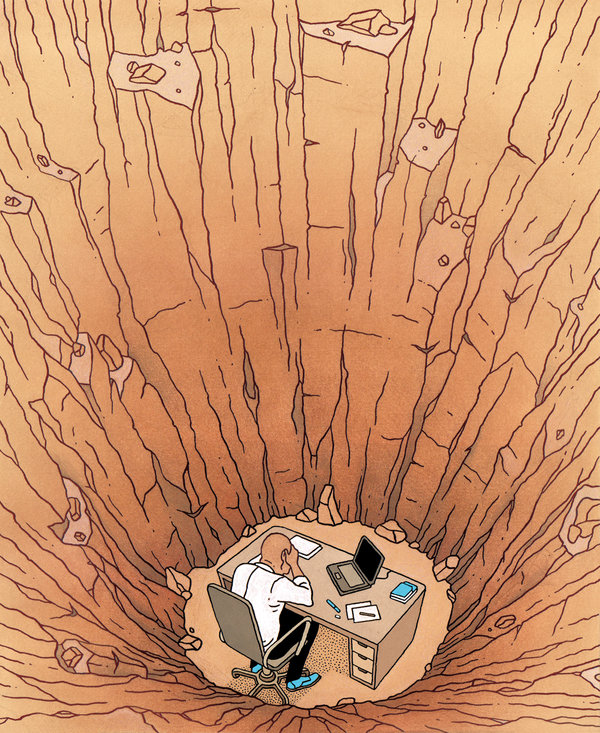 There are plenty of days when Eliza can’t manage to get herself out of the house. On others, she can’t even get out of bed. And in between, she often can’t sleep, can’t concentrate and can’t remember things. She definitely can’t hold down a job. At least not right now.
Eliza, who asked that I not disclose her last name, successfully battled depression for most of her life. She persevered through college and graduate school and worked steadily for more than a decade as a pharmacist. Then, about two years ago, she suffered from an unusually debilitating stretch in which she didn’t respond to antidepressants, and her insurance company refused to pay for experimental treatments that her doctors recommended. Now in her 40s, she has become one of the more than 1.4 million Americans on the federal disability rolls for mood disorders. She also receives Medicaid, food stamps and fuel assistance. “I never wanted a handout,” Eliza told me last month, adding that she has held on to her pharmacy license in the hope that her condition may yet improve. “I would give anything to get out of this and go back to where I was before.” Read more
Read More I want to talk briefly about “recovery.” Many clinicians and program directors were trained, as I was, to think that regaining marginal improvement or downward course were the only two options open for persons with repeated episodes of serious and persistent psychiatric problems, such as the group of schizophrenias, major depressions, or bipolar disorders. However, there have been over 30 follow-up studies, both short and very long, as well as hundreds of former recipients of services all displaying carefully collected data and brilliant examples about the possibilities of significant improvement and even full recovery.