 The Mad in America Continuing Education Project is pleased to announce the posting of its second on-line course.
This course qualifies for 3.0 CMEs approved by the American Academy of Family Physicians and 2.5 CEUs approved by Commonwealth Educational Seminars for psychologists, social workers, licensed marriage and family counselors, nurses and certified addiction counselors.
We are fortunate to have enlisted the expertise of one of the world’s premier researchers, Martin Harrow, PhD, of the University of Illinois Chicago Medical School as he presents his 26-year comprehensive outcome study of individuals diagnosed with schizophrenia and other psychotic disorders.
The course includes a one-hour discussion moderated by Bob Whitaker which includes Dr. Harrow’s chief collaborator, Dr. Thomas Jobe. The two lessons together focus on the improved outcomes for people who stopped taking antipsychotic medications compared to those on antipsychotics.
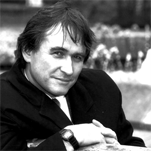
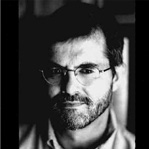
 Martin Harrow, PhD
Martin Harrow is a psychologist and widely-cited expert on schizophrenia and bipolar disorders. He has published over 250 scientific papers and four books on these and related areas. As Director of the Chicago Followup Study, he has received several national awards for his research on thought disorder, psychosis, long-term adjustment, suicide, and recovery in schizophrenia. Recently his research has focused on longitudinal studies of the long-term effects of antipsychotic medications. He has been on the faculty at Yale University and the University of Chicago, and in 1990, moved to the Medical College of the University of Illinois as Professor and Director of Psychology in the Department of Psychiatry. He is now Distinguished Professor Emeritus there.
We look forward to sharing the work Dr. Harrow, Dr. Jobe and other colleagues in better understanding the relationship between long-term use or non-use of psychiatric medications and important outcomes like functional status, psychotic symptoms and rehospitalization.
Read More
Negotiating with terrorists. That’s the feeling I came to have in trying to communicate and work with staff in a local acute psychiatric ward who had total control of my adult daughter, and I do mean TOTAL control. This may sound like hyperbole, and perhaps it is, in a way. Because I believe these people were, for the most part, well-intentioned. I don’t doubt that some of them were even kind and caring. It brings to mind the following quote of C.S. Lewis:
“Of all tyrannies, a tyranny exercised for the good of its victims may be the most oppressive.”
If they actually were terrorists, I think it would have been easier. In that case, I could have gone to authorities who would have readily collaborated to get her out. As it was, there was literally “no exit” (believe me, I checked ALL possibilities) and I had to constantly be “walking on eggshells” in the effort to stay in the good graces of those who held the pills, the needles, the restraints and the electrodes. I had to suppress the urge to scream at these nice people, although I did plenty of screaming (even bawling like a baby) on my own time.
Please note: If you are a state mental health commissioner, this blog could be hazardous to your continued tenure.
Recently at a neighborhood Fourth of July celebration, I talked with several people who live in nearby residential “treatment” homes. They almost all had tardive dyskinesia and most looked as if their emotions were so dampened down that they sat staring at the street in front of them, only incidentally aware of the sparklers and firecrackers. And all but one looked like they were well on their way to a prolonged case of “chronic mental illness”.
Read MoreLast week, an important study was published in JAMA Psychiatry. Wunderink and colleagues published results of a follow up study to one he had completed several years ago. In the initial study of first episode psychosis, subjects were randomized to one of two treatment strategies: maintenance treatment (MT) in which they were maintained on drugs for the two year study or drug discontinuation (DR) in which the drugs were stopped and then restarted if symptoms recurred.
Read More Recovery in Remitted First-Episode Psychosis at 7 Years of Follow-up of an Early Dose Reduction/Discontinuation or Maintenance Treatment Strategy Long-term Follow-up of a 2-Year Randomized Clinical Trial
Importance Short-term outcome studies of antipsychotic dose-reduction/discontinuation strategies in patients with remitted first-episode psychosis (FEP) showed higher relapse rates but no other disadvantages compared with maintenance treatment; however, long-term effects on recovery have not been studied before.
Read More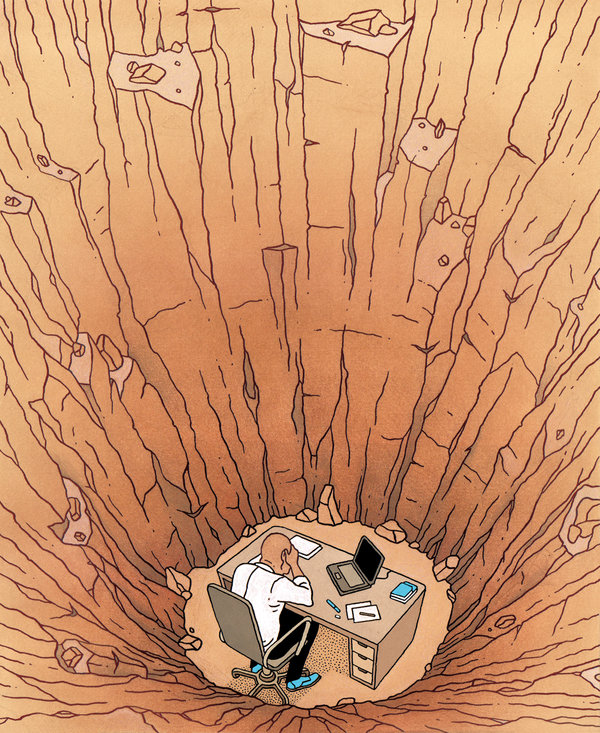 There are plenty of days when Eliza can’t manage to get herself out of the house. On others, she can’t even get out of bed. And in between, she often can’t sleep, can’t concentrate and can’t remember things. She definitely can’t hold down a job. At least not right now.
Eliza, who asked that I not disclose her last name, successfully battled depression for most of her life. She persevered through college and graduate school and worked steadily for more than a decade as a pharmacist. Then, about two years ago, she suffered from an unusually debilitating stretch in which she didn’t respond to antidepressants, and her insurance company refused to pay for experimental treatments that her doctors recommended. Now in her 40s, she has become one of the more than 1.4 million Americans on the federal disability rolls for mood disorders. She also receives Medicaid, food stamps and fuel assistance. “I never wanted a handout,” Eliza told me last month, adding that she has held on to her pharmacy license in the hope that her condition may yet improve. “I would give anything to get out of this and go back to where I was before.” Read more
Read MoreThere are many dictionary definitions of strength. “Being strong in body or in numbers, mental force, potency, cogency of argument, effective action, intensity, endurance, sturdiness, efficacious, and vitality.”1,2 After nearly 140 years of looking for deficits, damage, problems, and pathology, mental health care is beginning to turn upside down and is now learning to focus on strengths to build recovery from serious and persistent psychiatric problems.3.4
Read MoreAn interesting thing has been happening in Canada. In late 2011, the British Columbia Ministry of Health issued a report entitled, “A Review of the Use of Antipsychotic Drugs in British Columbia Residential Care Facilities.” The family of a senior living in such a facility raised the issue of over-medication and, instead of reacting defensively, the provincial government set about studying the prescribing practices of physicians in these residential programs.
Read MoreBack in 2011, I met with a group of mental health providers from diverse backgrounds who converged in Phoenix for a retreat to share ideas and vision of integrative mental health. From that shared time, the International Network of Integrative Mental Health (INIMH) was born.One of our mandates was to connect with other countries regarding the shared wealth of knowledge about integrative mental health. James Lake MD, our current president of INIMH, had reconnected with a long-lost cousin in Cuba about 2 years before. They worked hard to pull the opportunity together.
Read MoreWe, professionals, often think that we are the only holders of intelligent observations and trained to understand insights. After all, we have studied human behaviors long and hard, learned about theories and diagnosis, and trained in evidence-based approaches.One of the lessons many of my mentors/supervisors shared with me was the importance of recognizing the innate wisdom lurking in every recipient of our care.
Read More