Open Path Psychotherapy Collective is a non-profit network of mental health clinicians dedicated to providing affordable psychotherapy to individuals, couples, families, and children in need. Founded in 2012, Open Path has grown tremendously in the last 8 years, expanding to a network of almost 10,000 clinicians and connecting over 35,000 members with therapists across the United States and Canada.
Open Path’s model works by allowing members to join Open Path for a reasonable, one-time membership fee. Members are then able to select an Open Path therapist with whom they would like to begin their therapeutic journey. Members have lifetime access to therapy sessions with an Open Path therapist at greatly reduced sliding scale rates. Therapy sessions can be done in-person or using an online platform.
Therapists who join Open Path join a larger nationwide movement to make mental health care more accessible and are able to directly provide affordable therapeutic services in their local communities. Therapists are also linked with a number of professional benefits that enable them to strengthen and grow their practice.
When the Covid-19 pandemic began to affect U.S. communities in March, we at Open Path had many conversations about the potential mental health impacts of the pandemic. With Americans feeling isolated and anxious due to social distancing requirements, and with the economic downturn that resulted in millions of people losing their jobs and struggling with increased financial insecurity, we anticipated that there would be a greater need for affordable therapy. And while we initially saw a dip in new member enrollment in late March, we are now seeing new member enrollment numbers climb back up to pre-pandemic levels.
At Open Path, we have a unique window into the mental health state of the collective, as we review hundreds of new member applications every week in which people provide a snapshot of their mental health needs. The majority of new member applications we are currently seeing mention the profound effects of the pandemic – members frequently mention lost jobs, challenged relationships, and increased anxiety. Members also mention how mental health needs that had gone unaddressed before the pandemic are now further compounded by the pandemic’s effects. In the upcoming months, we anticipate a large need for more Open Path therapists as our member numbers grow. We are focusing our efforts on recruiting more therapists to meet the impending increase in mental health needs.
Please consider contributing to Open Path to help grow our therapist network. This is a time of immense mental health care need and by donating to Open Path, you directly assist us in meeting that need.
Our gratitude and thanks-
Paul Fugelsang
Executive Director
Open Path Psychotherapy Collective

 Paul Fugelsang, MA, LPC, is the founder and executive director of Open Path Psychotherapy Collective. He received a masters in psychology from Naropa University. He is also the advisor of the Open Path Psychotherapy Collective Fund at the Open Excellence.
Read More
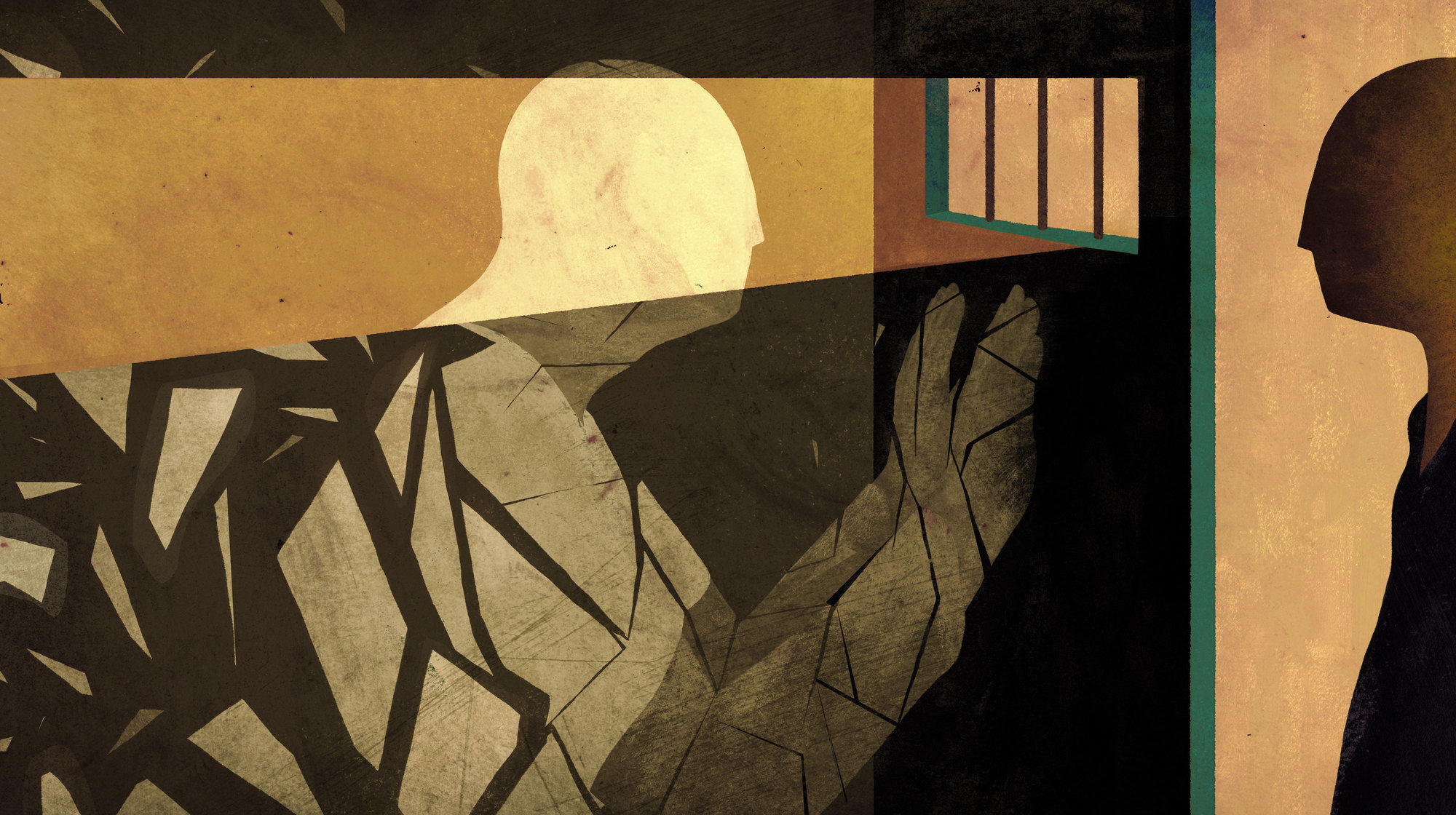
The SARS-Cov-2 pandemic has produced challenges for mental health services, but it also provides opportunities to reassess and improve our mental health care system. When National Health Service England (NHSE) asked service providers to free up inpatient capacity1, many, particularly in London, discharged large numbers with informal reports of up to a fifth of people who were previously detained being discharged. In Lombardy and Madrid mental health beds were closed and wards converted for Covid-19 patients, but clinical colleagues tell us that this was not achieved by discharging people who had been legally detained. If we understand how this discharge rate was achieved, and why it was different to other services in Europe then we might be able to improve services in the future.
There have been no changes to the detention criteria that could justify why people who pre-covid warranted formal detention, now no longer warranting that detention now the pandemic is upon us. These discharge rates raise questions about whether the threshold for detention was adequately stewarded pre-covid-19. Perhaps we have been depriving people with mental health difficulties of their liberty unjustly?
Read More Although you might be under lockdown, you are still allowed to go to the supermarket to buy food. The following information might help in terms of making healthier choices on what foods to buy.
When we are under high stress, we can often reach for foods that are “comforting” (like cookies, donuts, cake, pastries, and chocolate bars), but these foods may not be the best choice for feeding your brain under stressful and demanding circumstances. Comfort foods are often calorie-rich but nutrient-poor.
Further, under high stress (and it doesn’t actually matter what has caused the high stress, whether it be a natural disaster like an earthquake or fire, or witnessing something really traumatic or being stressed because of financial and health uncertainty), the reactions our body goes through can be quite similar. We release adrenaline. This is part of our natural alarm response system.
Read More Abstract
In 2011, I had the privilege of joining the Department of Veterans Affairs (VA) to launch a national program to provide outreach, screening, and treatment services for veterans with depression, post-traumatic stress, anxiety, and other mental health needs. These efforts became a passion for me because during my three years as the president of Student Veterans of America (SVA), we lost some student veterans to suicide. When I received the first notification of a suicide, I felt like a commander who’d lost an airman but didn’t have the resources to stop it from happening again.
At the time, I’d viewed the VA as the consummate experts in the area of veteran mental health and suicide prevention, and felt my job offered the best opportunity to make an impact.
A few years later found me working in New York City as a tech entrepreneur. It was here that I climbed onto the train I’d previously been working to drive: I became a patient in a veteran mental health program.
Read MoreOBJECTIVE: There is an elevated risk for suicide in the year following psychiatric hospitalization. The present study examined whether perceived coercion during admission into psychiatric hospitalization increases risk for postdischarge suicide attempts.
(The BMJ) – In February 2018 the international debate on antidepressant withdrawal was reignited.[1, 2, 3, 4] In response to a letter published in The Times by Davies et al on the benefits and harms of antidepressants,[1] the Royal College of Psychiatrists publicly stated that “[for] the vast majority of patients, any unpleasant symptoms experienced on discontinuing antidepressants have resolved within two weeks of stopping treatment.”[2]
To support this claim, the college referred to the guidelines from the National Institute for Health and Care Excellence (NICE), which state that “[withdrawal] symptoms are usually mild and self-limiting over about 1 week.”[5]
When Davies et al issued a freedom of information request to NICE asking for the evidence for its 1 week claim, NICE was able to provide only two short review articles, neither of which support the 1 week claim while both cite numerous sources that contradict it.[6]
We think that NICE’s current position on antidepressant withdrawal (first established in 2004) not only was advanced on insufficient evidence but is now widely countered by subsequent research.
(Medscape) – Hello. I’m Dr Arefa Cassoobhoy, a practicing internist, Medscape advisor, and senior medical director for WebMD.
Benzodiazepines are in the news again—this time, not for the increased risk for falls and fractures that can come with their use.
A case-control study was conducted in Finland among community-dwelling adults who had been diagnosed with Alzheimer disease. Benzodiazepines and related Z drug use was associated with a modestly increased risk for Alzheimer disease. No real differences were seen for the drug subcategories. This included short-, medium-, and long-acting benzodiazepines, as well as zolpidem, zaleplon, and eszopiclone.
The analysis showed that 5.7% of dementia cases among adults using benzodiazepines were due to the drugs. Even this small increased risk could be significant because they are widely prescribed to elderly adults, often long term. The drugs are given to treat prodromal and neuropsychiatric symptoms of dementia like insomnia and anxiety.
The authors concluded that benzodiazepines and Z drugs should be avoided when possible, given their adverse-event profile. For patients who you would like to wean off benzodiazepines, deprescribing can be tough and take a long time. Guidelines are now available to help you with the process.
Source: Medscape.com
Read More(The Journal of Behavioral Health Services & Research) –
Self-employment is an alternative to wage employment and an opportunity to increase labor force participation by people with psychiatric disabilities. Self-employment refers to individuals who work for themselves, either as an unincorporated sole proprietor or through ownership of a business. Advantages of self-employment for people with psychiatric disabilities, who may have disrupted educational and employment histories, include opportunities for self-care, additional earning, and career choice. Self-employment fits within a recovery paradigm because of the value placed on individual preferences, and the role of resilience and perseverance in business ownership. Self-employment creates many new US jobs, but remains only a small percentage of employment closures for people with psychiatric disabilities, despite vocational rehabilitation and Social Security disability policies that encourage it. This commentary elucidates the positive aspects of self-employment in the context of employment challenges experienced by individuals with psychiatric disabilities and provides recommendations based on larger trends in entrepreneurship.
Full Text: Link.Springer.com/epdf/10.1007/s11414-018-9625-8
Read More I have had the great privilege and pleasure of working with a group of colleagues in Vermont who share my interest in bringing the humble and democratic ways of working developed in northern Finland and Norway to our state. Many of us were introduced to this work by Robert Whitaker’s description of Open Dialogue in Anatomy of an Epidemic and Daniel Mackler’s documentary Open Dialogue, and some of us worked with Tom Anderson, who came to Vermont in the 90s.
Some had traveled to Europe to attend the annual meeting of the International Network for the Treatment of Psychosis, the group of clinicians who had been working in this way for the past two decades. Others had the opportunity to train with Mary Olson, PhD at the Institute for Dialogic Practice. We have formed study groups and developed small teams who are beginning to introduce this way of working to our clinics.
Read More