
Several years ago, a person whom I was serving as a psychiatrist changed my life. This man had been a participant for some years in the services of the non-profit where I work, Advocates in Framingham, Massachusetts.
He had spent years going in and out of hospitals, for what doctors called bipolar disorder, but what he himself experienced as periods of great spiritual elation (which clinically looked like mania) alternating with what he described as “spiritual hibernation” (which looked like severe depression).
Over the years, I have come to love and respect this person very much; he has taught me many things; he has become a beloved friend. As far as his “condition” is concerned, he still experiences the cycles, and when he is “hibernating” he needs the care of a hospital. From a “clinical” perspective, he does seem to “have” bipolar disorder. But he is also one of the most deeply committed spiritual seekers I have ever met, and his heart and soul radiate love. He’s also something of a joker and a curmudgeon. As I said, I’ve come to treasure him.
But as to how he changed my life, or started changing my life: one day in my office for a visit, he berated me for not knowing anything about the journalism of Robert Whitaker, and something called Open Dialogue. Chastened, I read Mad in America.
Adventures in Open Dialogue
Impressed, I contacted Robert Whitaker and invited him to come to our company – I wanted to share something hopeful with him – to meet our Director of Recovery and Self-Advocacy, Keith Scott, himself a Certified Peer Specialist, who’d created a terrific team of Certified Peer Specialists.
This team has served as a profound source of hope for the people we support, and as a deeply valuable reminder to those of us in clinical roles that there are many various paths to recovery.
It so happened that right around this time, Jaakko Seikkula, a founding member of the team that created Open Dialogue, was speaking in the US with his primary US collaborator, Mary Olson. Bob Whitaker introduced me to both of them, and I learned first-hand about the power and promise of Open Dialogue, as a way of serving young people experiencing psychosis in a way that maximizes their empowerment and sense of agency, engages them, their family and other networks of support, and minimizes the toxicity of psychiatric treatments.
I could immediately see the tremendous potential for Open Dialogue in a progressive, person-centered and strength-based agency like the one I work in, Advocates. A team of us dreamt of using the resources of Advocates – especially its mobile outreach services, crisis team and outpatient capacity – to adapt Open Dialogue to the US environment. And the stars seemed aligned: Mary Olson was just on the verge of opening her Institute for Dialogic Practice, to teach Open Dialogue with faculty from Finland and elsewhere; we were deeply fortunate to receive a grant from the Foundation for Excellence in Mental Health Care, and support from our Department of Mental Health; and I was incredibly blessed with visionary administrators and leaders who supported this dream and made it a practical reality: Bill Taylor (now of blessed memory); Diane Gould, Beth Lacey, and most critically, Brenda Miele Soares, who helped operationalize the project.
Over three years, we trained 35 clinicians to the level of certification in Mary’s institute, and we enacted two programs. The first was an adaptation of Open Dialogue for young people with early psychosis, which we called The Collaborative Pathway. We named our program this because there are some differences with Open Dialogue in Finland.
For example, we are unable to provide our services in the hospital when a young person is hospitalized. We also felt we should differentiate ourselves from Open Dialogue because when we began our project we were not yet certified – which we made clear to the young people and families we served. We partnered with colleagues at the Boston University Center for Psychiatric Rehabilitation and with the University of Massachusetts Department of Psychiatry to ensure that we measured outcomes from the Collaborative Pathway. We recently published the results of our first cohort of 14 families served in this model.
In brief, we found that our service was safe – we had no serious adverse events. We found that our service was effective – our clinical outcomes were very good in terms of decreasing days of hospital use, increasing days of work or school, and preservation of social roles. We found that our service promoted shared decision making, especially about the vexing question of whether, when and how to use antipsychotic medications, with young people choosing a variety of treatment paths – some to decrease or eliminate antipsychotics, others to find lower effective doses, and some to choose to go onto antipsychotic medications.
On the whole, people loved the program – both the young people at the center of concern and their families. They found this approach vastly more personal, empowering and collaborative than standard care. We are preparing now a second qualitative paper describing these outcomes.
Our second Open Dialogue-inspired program is for people whom we serve who are already deeply engaged in the mental health system, who are clients of the Department of Mental Health.
We hoped that using Open Dialogue processes would stimulate hope and creativity – maybe mainly in ourselves as we recognized that to some extent we’d become “chronified” in our thinking and engagement. That has in fact been our experience.
The people we support have found the Open Dialogue approach to be helpful, energizing and a good way to mobilize creativity. In both of our programs, staff have loved this approach. Most of us feel it’s the best work we’ve ever done, and I think every one of us would want this approach for a loved one or for ourselves.
Changing the world, one person at a time
Which brings me full circle to my friend and mentor who first chastised me about not knowing about Open Dialogue. He and his family have been engaged in our Open Dialogue program for the past three years. He and they value it very deeply.
My friend still experiences the storms of psychiatric/spiritual turbulence, and he still needs the hospital from time to time. But he and his family, and the larger network of his religious community, have a process now for support that they did not have before. And I think I can say that in the Open Dialogue process, my friend feels heard, appreciated, and honored as a human being in a way that ordinary clinical processes often miss.
We are now in our second cohort of young people in the Collaborative Pathway. We could not do this without the generous support of open-hearted philanthropists – insurance covers only a small part of our costs.
We could not have done this without the donors of the Foundation for Excellence in Mental Health Care, and, more recently, the Cummings Foundation. But we are running out of money – we very much are in need of further support.
Please, if you are so moved, reach out your hand and contribute to the Foundation for Excellence in Mental Health Care so we can continue this crucial work.
Thank you,
Chris Gordon, MD
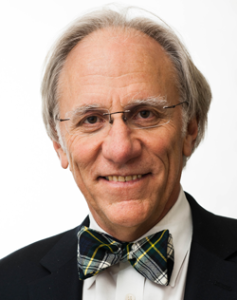 Dr. Christopher Gordon serves on the board of the Foundation for Excellence in Mental Health Care. He is the Medical Director and Senior Vice President for Clinical Services of Advocates, Inc., a full-service, not-for-profit provider of residential, outpatient and emergency crisis intervention services for people with psychiatric and developmental disabilities, and other life challenges.
Dr. Gordon serves as Associate Professor of Psychiatry, Part-time at Harvard Medical School, and Assistant Psychiatrist at Massachusetts General Hospital, where he teaches principles of collaborative formulation, about which he has published and lectured extensively.
He is also Adjunct Associate Clinical Professor of Psychiatry at the University of Massachusetts School of Medicine. He is certified by the American Board of Psychiatry and Neurology. Dr. Gordon is a Distinguished Life Fellow of the American Psychiatric Association.
In 2012, Dr. Gordon was named the Psychiatrist of the Year by NAMI Massachusetts. In 2007, he received the Distinguished Service Award from the Commissioner of the Department of Mental Health. In 2008, he received the Edward Messner Award for outstanding teaching of residents at MGH and McLean Hospitals.
Dr. Gordon is a certified practitioner of Open Dialogue, a progressive practice developed in Finland for the management of psychiatric crisis, and is a founder and clinical leader of the Collaborative Pathway at Advocates, Inc, the first US-based adaptation of Open Dialogue. He is married to Julie Gordon, and they have two sons, Morgan and Noah.







Fascinating and profoundly inspiring. I am a psychiatrist in private practice in Los Angeles. I look at treatment as a unique journey with each individual client. Healing may or may not include medication. I feel like a “loner” in a field managed by medication protocols. Thank you for this inspiring article and work.